
Table of Contents
Oats are a frequently missed, yet far-balanced grain providing proteins, carbs, saturated fatty acids, and soluble fiber, as well as vitamins and minerals. Although many simply think of them with meals for breakfast, they have an opportunity to be found in meals that are savory, baked goods, and even smoothies.
The oat, whose official scientific designation is Avena plant, is an example of wheat grain from the Poaceae, or grassy group of vegetation. Grains have been available for a long time; however, it was not until recent years that they were considered as a desirable supplement to the diet. Compared to other grains like wheat and barley, many considered them to be weeds. Therefore, in North America, oats were largely farmed as a feed for animals. Today, Europe is the main producer of oats with the Americas being the second largest and they are predominantly farmed in Russia, Canada, and the United States since they do well in cool, damp regions. In, the Food permitted marketers to include a health claim on products containing oats indicating that they may reduce the risk of coronary heart disease. This was a huge breakthrough, as this agency had previously only allowed health claims to be made on classes of foods rather than an individual food. People’s views of the benefits of oats started to shift at this point.
They might find nonetheless that the cereal department at the grocery store has a selection of oats to choose from. It can be difficult to determine whether the nutritional value of each option differs or what the differences are. You may not be familiar with oat groats. These are the complete oat kernels that are collected, with only the loose, inedible hull removed from the surface. They require the longest cooking time 50
to 60 minutes on the stovetop—because they are the least processed type of oats.
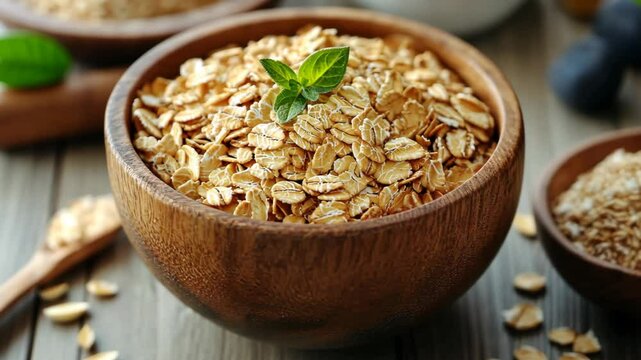
Oats grains were that every other kind of oats is built of, but what distinguishes is the type and degree of processing. Steel-cut oats, which can also be termed Irish oats, are formed when the oat groat is sliced into 2-3 smaller pieces. This speeds up the cooking process, allowing them to be manufactured in a considerably quicker period than groats, at 15-25 minutes on the burner. A less recognized form are Scottish oats, which are stone-ground into a meal consistency, resembling a porridge when cooked. Rolled oats, which are the same as old-fashioned oats, are readily available in the grocery. These are formed by the oat groat being steamed, rolled, and flattened into flakes and then dried up to remove any extra moisture. This kind can cook on the stovetop in 10 minutes. Quick oats and instant oats are both prepared similarly to rolled oats, but they are rolled even thinner, as this allows the water to soak more easily, speeding up the cooking time even further. Quick oats cook as fast as they sound, in as little as 5 minutes in the microwave, with instant oats being able to be cooked even faster, in just 2 minutes.
All oats are well-balanced grains because they contain fiber, healthy fats, protein, and carbs, even if their precise nutritional profiles vary slightly. Oats are unique in that they contain a soluble fiber termed βglucan, a polysaccharide. Low-density lipoprotein cholesterol is a significant risk factor for cardiovascular disease, and glucans have been shown to help lower it. Additionally, they include phenolic compounds like avenanthramides, a special antioxidant found in large quantities in oats. Oats provide phosphate, thiamine, magnesium, zinc, and insoluble fiber in addition to soluble fiber.
While every type or oats are complete grains, having the bran, endosperm, and germ, they differ based on the degree of processing. Therefore, as the oat is more processed, the quantity of fiber is affected, and it breaks down quicker. This is because the processing has a direct effect on glucans being released from the wall of the oat groat cell. This improves its glycemic index and leads in blood sugar rising quicker. Since the soluble fiber content is what gives oats their oligo qualities, the less processed variants will be richer in prebiotics. On the diet, oat groats or steel-cut kinds are advised for this purpose.
In one research of patients with Crohn’s disease, the purpose was to assess the effects of eating significant amounts of oat bran in the diet for 24 weeks vs a control group that was eating a diet very low in fiber that contained wheat. The study indicated that taking an oat bran diet was well tolerated, lowered cholesterol, and avoided symptoms. In a thorough systemic literature review on oats and bowel disease, it was found that long-term dietary intake of oats or oat bran could give benefits for people with IBS or ulcerative colitis.
So, which are the different ways you can add oats to your diet and enjoy the benefits? Oat grains can be a great grain for eating at the end of the day. Add them to meals, make an oatmeal bowl, or eat them straight as a side dish. Try preparing a cauliflower or mushroom risotto with steel-cut oats; the Center for Applied Nutrition’s website has recipes. When heating up, old homemade or rolled oats are a better option for maintaining an established texture. Try adding cooked oats to a smoothie or experiment putting various toppings (such as fruit, nuts, flaxseed) on your daily oatmeal. Oats are a fairly plain food that makes them very adaptable. How are you going to sneak more oats into your regular diet? Start by looking out the recipe beneath for an oats carrot-flavored pancake!
Carrot Cake Muffins with Oatmeal
Materials
Dry Supplies:
1 cup of rolled oats
1 cup all-purpose flour (or whole wheat flour)
1 teaspoon of baking powder
½ tsp baking soda
1 teaspoon of cinnamon
¼ tsp nutmeg (optional)
¼ tsp salt
Wet Ingredients:
2 eggs
½ cup brown sugar or honey
1 cup grated carrot
½ cup milk (dairy or plant-based)
¼ cup melted coconut oil or vegetable oil
1 tsp vanilla extract
Optional Add-ins:
¼ cup raisins
¼ cup chopped walnuts
2 tablespoons of desiccated coconut
Instructions
Preheat Oven-
Set the oven temperature to 180°C (350°F). Line a muffin tin with paper liners.
Mix Dry Ingredients
Oats, flour, baking soda, baking powder, cinnamon, nutmeg, and salt should all be combined in a basin. Mix well.
Combine Wet Substances
Beat the eggs, milk, sugar/honey, melted oil, and vanilla together in a separate dish until smooth.
Add Carrot Stir in the shredded carrot.
Mix Mixtures
Fill the dry mixture with the wet mixture. Fold gently—do not overmix.
Add raisins or nuts if using.
Fill the Muffin Cups
Each muffin cup should be about ¾ filled.
Bake Bake for 18–22 minutes, or until a toothpick inserted in the center comes out clean.